
Men's Wardrobe Essentials
By House of Sheriff
Most men don't have a clothing problem. They have a combination problem. A cupboard full of shirts that match no trousers, three pairs of jeans that all fit differently, and a blazer that has been worn twice. Dressing well is less about buying more and more about buying right. That is the idea behind men's wardrobe essentials: a small base of reliable pieces that mix, match and last for years.
What Counts as an Essential?
A piece earns its place when it passes three tests. It works in at least three different outfits, it suits more than one occasion, and it keeps its shape after months of wear. Trends come and go, but these pieces stay useful. When we talk about men's wardrobe essentials at House of Sheriff, we mean clothes that clear all three tests, nothing more and nothing less.
The 12 Pieces
1. White Shirt
Nothing else does as much. Under a blazer, with rolled sleeves and jeans, or tucked into tailored trousers for an interview, it adapts to everything. Choose a cotton with a little weight so it doesn't turn see-through, a collar that stands up on its own, and a cut that skims your torso instead of tenting around it. Buy a spare, because it will be the piece you reach for most.
2. The Light Blue Oxford Shirt
Softer than white and kinder on tired mornings, a pale blue oxford works with navy, grey, beige and olive. The textured weave looks relaxed enough for a weekend and neat enough for a Monday meeting. Wear it tucked or untucked, depending on how long the shirt is.
3. Plain Crew-Neck T-Shirts
Keep a few in white, black, grey and navy. Quality shows in the collar, which should lie flat even after many washes. Sleeves should end around mid-bicep and the hem should fall near the belt line. Wear them alone or as a base layer under overshirts and jackets.
4. A Good Polo
The polo is the quiet hero of smart-casual offices. It looks sharper than a tee and feels easier than a shirt. Piqué cotton breathes well on warm afternoons. Pick a collar that doesn't curl, and avoid oversized logos that shout over the fit.
5. Dark Indigo Jeans
One pair of dark, plain, slim-straight jeans can go from a casual lunch to a dinner with a blazer. Skip heavy fading, rips and loud stitching. A touch of stretch helps through long days, but avoid fabric that bags at the knees by evening.
6. Chinos
Chinos bridge the gap between jeans and formal trousers. Khaki, olive and navy cover most needs. Look for a mid-rise waist, a slightly tapered leg and a hem that breaks just above the shoe.
7. Tailored Trousers
Weddings, interviews and client meetings call for trousers with a proper drape. Charcoal grey is the safest place to start. A wool blend or light tropical weave suits our climate better than heavy suiting. Get the hem and waist altered, because trousers straight off the rack rarely look right.
8. A Navy Blazer
No conversation about men's wardrobe essentials is complete without it. A navy blazer lifts a tee-and-jeans outfit and finishes a shirt-and-trousers look. Choose an unlined or half-lined jacket for warm weather. The shoulders must fit exactly, since they are the hardest part to alter.
9. A Fine-Knit Sweater
A merino or cotton-blend crew neck in grey or navy handles air-conditioned offices, cool evenings and travel with equal ease. Wear it over a shirt, under a blazer, or on its own.
10. A Versatile Jacket
A bomber, a harrington or a clean denim jacket gives you an outer layer for casual days. Pick a neutral shade such as olive, tan or navy with minimal branding. It should sit at the hip and leave room for a sweater underneath.
11. A Classic Kurta
For festivals, family functions and relaxed celebrations, a well-fitted kurta in off-white, black or a muted solid is far more useful than a loud one. Cotton or linen is best. Keep the length between mid-thigh and knee, and pair it with jeans or churidar.
12. Leather Derby Shoes
Footwear changes the whole outfit. A pair of brown or black derbies works with chinos, tailored trousers and even dark jeans. Keep them clean, use a shoe tree, and re-sole them when needed. Good leather can last a decade.
Fit Comes Before Everything
A modest shirt that fits well beats an expensive one that doesn't. Check three things before you buy: shoulder seams should sit at the edge of your shoulder, sleeves should end at the wrist bone, and the garment should let you move without pulling. A good tailor is the cheapest upgrade a man can make. A few hundred rupees spent on alterations can make a mid-priced piece look custom-made.
Choose a Colour Palette
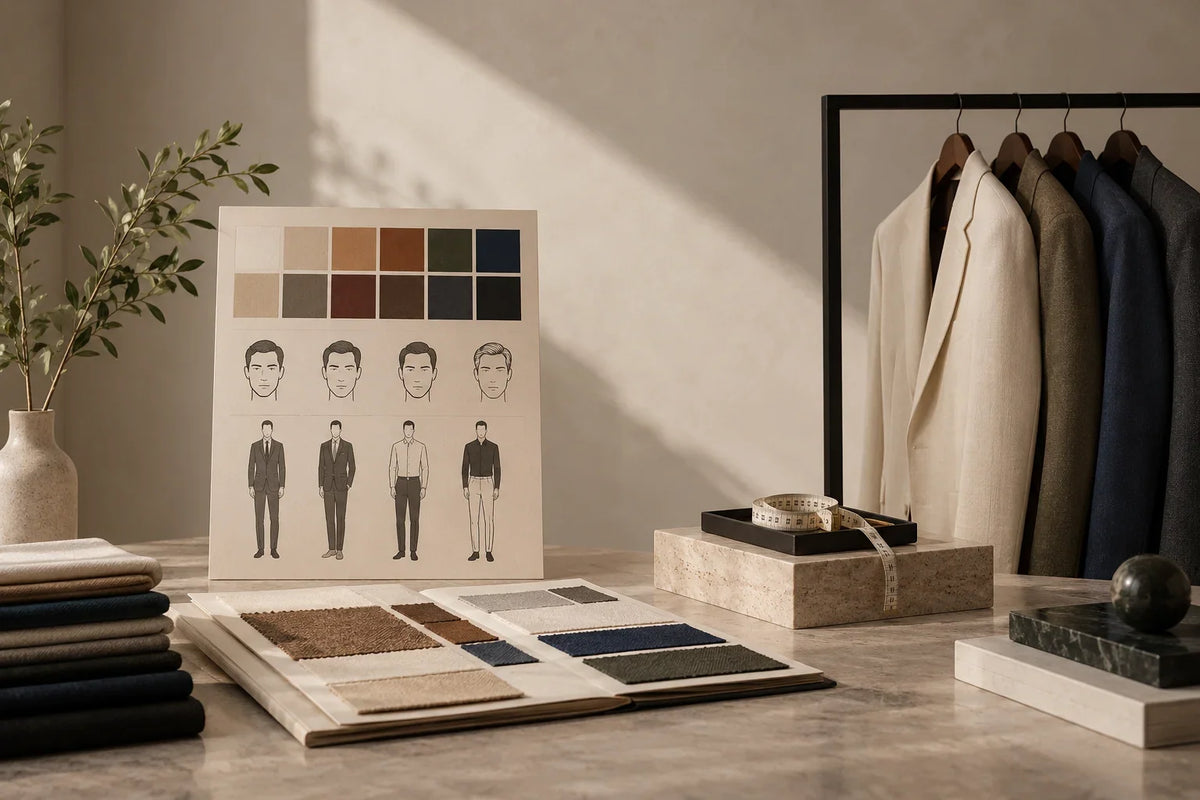
The easiest way to make men's wardrobe essentials work together is to limit your palette. Pick two or three neutrals, such as navy, grey and beige, then add one or two accent shades like olive, burgundy or rust. When every piece shares a few colours, any top goes with any bottom. Getting dressed becomes a ten-minute job instead of a daily argument.
Building on a Budget
Building men's wardrobe essentials doesn't require a big budget. Spend more on items you wear often and that must fit well, such as shoes, a blazer and trousers. Spend less on basic tees and polos. Buy one or two pieces a month rather than everything at once, and you will learn what suits you as you go.
Mistakes to Avoid
One of the most common mistakes with men's wardrobe essentials is buying the right piece in the wrong size. Another is chasing sale prices on items you would never normally wear. Be wary of too many patterns, too many logos and shoes in poor condition. A simple outfit in good fit and clean condition will always beat a complicated one that looks careless.
Care Keeps Clothes Sharp
Proper care keeps men's wardrobe essentials looking sharp for years. Wash shirts inside out on gentle cycles, hang knitwear flat to dry, and use wooden hangers for blazers. Rotate your shoes so they rest between wears. Steam rather than press delicate fabrics. These small habits protect what you have spent money on.
Why House of Sheriff
House of Sheriff believes clothes should serve the man wearing them. Our approach to men's wardrobe essentials is practical and honest: fewer pieces, better fits and outfits you can actually repeat. We would rather you own twelve pieces you use every week than forty you ignore.
Frequently Asked Questions
What are men's wardrobe essentials?
They are the core clothing pieces that work across many outfits and occasions, such as a white shirt, dark jeans, chinos, a navy blazer and leather shoes.
How many men's wardrobe essentials do I need to start?
Twelve well-chosen pieces are enough to create dozens of outfits. You can add more as your needs grow.
Can men's wardrobe essentials work in Indian weather?
Yes. Choose breathable cotton, linen and light wool blends, and layer with a sweater or jacket for cooler evenings and air-conditioned spaces.
What should I buy first?
Start with a white shirt, dark jeans and a pair of leather shoes. Those three alone cover most situations.
How often should I replace basics?
When they lose shape, fade unevenly or stop fitting well. With good care, most essentials last two to five years.
Is a blazer necessary if I work in a casual office?
It is worth having one. Weddings, interviews, dinners and client meetings come up in every career, and a blazer saves you from last-minute stress.
How do I know my correct size?
Try garments on and check the shoulders, sleeve length and comfort of movement. When in doubt, ask a stylist or tailor for help.
Good style isn't about owning a lot. It is about owning the right things and wearing them with confidence. Start with these twelve pieces, get the fit right, and keep your palette simple. Men's wardrobe essentials are not a trend to follow. They are a foundation to build on, and House of Sheriff is here to help you build yours.